
Building Our Future Together: An Update on Charlotte’s Community Area Plans
In our mission to ensure that Charlotte grows in a way that is equitable, sustainable, and vibrant for everyone, the voices of our residents must be the compass that guides us. During the January 5th meeting of the City Council Transportation, Planning, and Development Committee, city leaders took a significant step toward refining that compass.
While seven of our city’s Community Area Plans (CAPs) were adopted this past November, seven others were deferred to allow for more intentional, deep-dive conversations. At Sustain Charlotte, we believe this “pause” is a vital opportunity to ensure that the maps reflecting our future don’t just show where buildings go, but protect the people and environments already there.
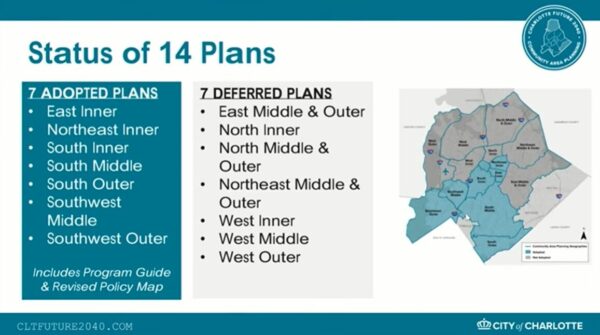
As we shared in this blog post back in November, this is a complicated situation. It’s important for all geographies of the city to have updated plans adopted as soon as possible because these are the documents that determine what can and can’t be built. Without them, it’s possible for development to occur that doesn’t reflect the community’s vision for its own growth. Yet it’s also critical that resident input be fully heard to ensure that the draft plans genuinely incorporate residents’ current and future needs.
After Monday’s meeting, we’re feeling good about the city’s plan to engage in robust public engagement and move the revised draft plans towards release in March!
Why Engagement Matters: Your Voice, Your Map
The Community Area Plans are the “third level” of guidance that brings the high-level goals of the Charlotte 2040 Comprehensive Plan down to the street level.
Planning Director Monica Holmes highlighted a critical reality during the committee meeting: the seven deferred areas (largely spanning the “Crescent” from West to East Charlotte) are home to our most vulnerable populations. By overlaying data, the city has identified a direct correlation between these deferred planning areas and neighborhoods at high risk for displacement and environmental injustice.
The engagement process is crucial for two main reasons:
-
Preventing Displacement: We must ensure the “tools in the toolbox” are actually effective for residents facing rapid growth pressures. Your input helps staff determine if proposed policies are strong enough to keep long-term residents in their homes as property values rise.
-
Environmental Justice: The deferred areas often face higher “urban heat island” effects, lower tree canopy coverage, and proximity to industrial zones. Community feedback ensures that new maps prioritize green space and air quality, rather than repeating the planning mistakes of the past.
When residents speak up, the maps change. This process ensures that the vision for a “Complete Community” is defined by those who live there, not just by developers or data points.
What’s New: A More Transparent Process
To make these plans more accessible, the city is piloting a new Staff Analysis format for rezoning meetings starting this month. You can expect:
-
Plain Language: Moving away from technical jargon so every neighbor can understand what a zoning change means.
-
Cumulative Impact Maps: New visuals will show not just one proposed building, but all “by-right” projects and infrastructure happening nearby, giving a true picture of how a neighborhood is changing.
-
Priority Goals: Every rezoning request will now be measured directly against the “Priority Goals” identified by the community during the planning phase.
Next Steps: How to Get Involved
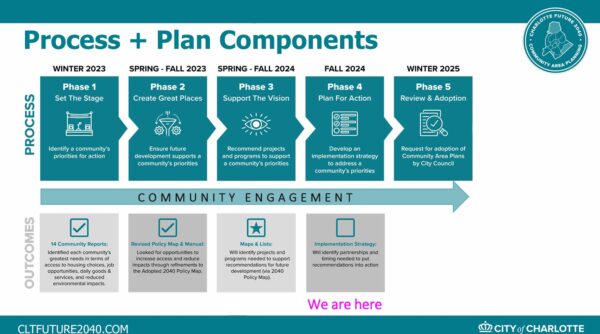
The city is revving up for a massive month of community feedback in February. This is your chance to weigh in on the policies that will govern growth in the deferred areas for the next two decades!
1. Neighborhood Meetings
The city has hired outside consultants to facilitate honest, deep-seated conversations through a series of meetings with neighborhood-based organizations. These will focus on managing growth, infrastructure, and environmental impacts.
-
When: Throughout February 2026.
-
Format: Two in-person meetings and one virtual option.
2. Citywide Survey
A survey will be open from late January through February. This is a vital tool for those who cannot attend meetings in person to voice their concerns specifically regarding displacement and environmental justice.
3. Final Council Decision
Following this intensive engagement period, the Planning Department will present proposed changes to the City Council in early March, with a final vote scheduled for March 9th.
Note: Even if you live in one of the seven areas where plans were already adopted, stay tuned! Any new, stronger policies regarding displacement or environmental protection developed during this February session can be applied back to the adopted plans as well.
At Sustain Charlotte, we are encouraged to see the city taking the time to create these maps the right way by maximizing their engagement with residents. We urge all our members to participate in the upcoming meetings and surveys.
Get Involved!
Visit the city’s Community Area Planning page to learn more about the upcoming meetings and sign up to receive email updates. At the bottom of that page, you’ll find links to visit the CAP virtual open house, view and add comments on the draft plans, or request that staff attend an upcoming neighborhood meeting.