
A City is More Than Its Growth
By Shannon Binns
Founder and Executive Director
In May, census data confirmed that Charlotte was the fastest-growing large city in America in 2025.
Around the same time, regional leaders voted to halt plans for a multi-billion-dollar I-77 toll lane expansion.
Those two stories may seem unrelated.
To me, they’re deeply connected.
In fact, they go to the very reason I founded Sustain Charlotte.
When I moved to Charlotte in 2007, I immediately noticed something that felt both exciting and concerning.
Charlotte was booming.
New residents were arriving every day. New neighborhoods were appearing seemingly overnight. Corporate relocations were celebrated. Development was everywhere.
Growth itself was treated as the goal.
Yet as I traveled around the region and spoke with residents, I heard a different perspective.
People worried about worsening traffic.
They worried about the loss of trees, farms, and natural areas.
They worried about housing affordability.
They worried about whether their children would inherit a community that was healthier and more connected than the one being built around them.
Most of all, many felt powerless.
There was a widespread sense that decisions about Charlotte’s future were being made by a relatively small group of influential voices, while ordinary residents were expected to simply accept the outcome.
Charlotte has long been shaped by powerful business interests. The phrase “the business of Charlotte is business” became part of the city’s identity. The city earned a reputation for being highly successful economically, but many people felt that community values, quality of life, and long-term consequences often took a back seat to growth and development.
At the time, there was no organized citizen voice consistently advocating for a different vision.
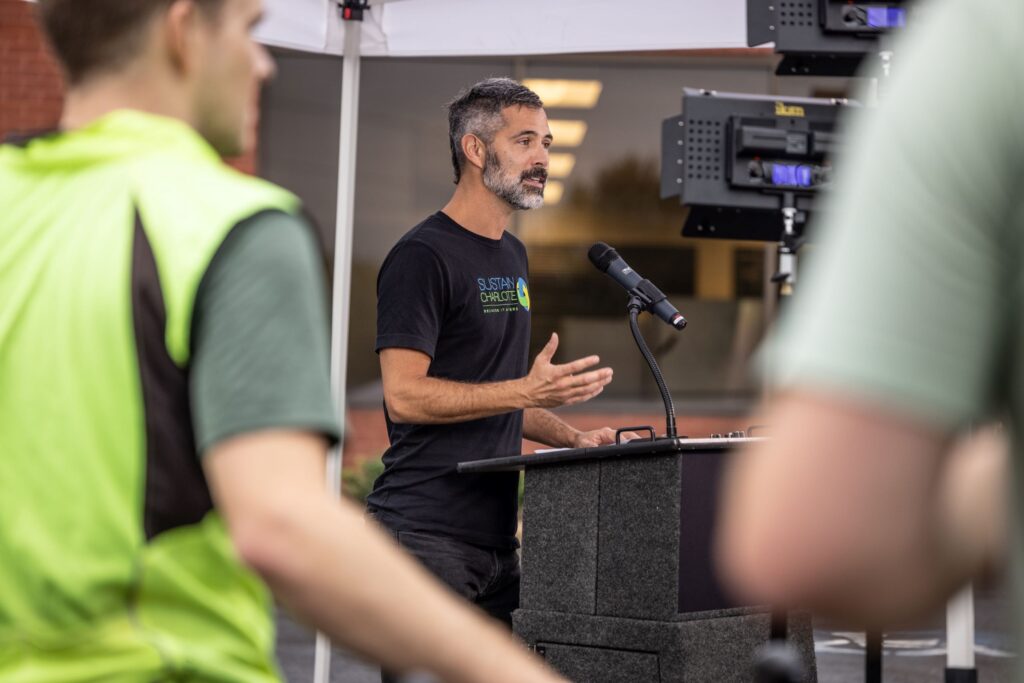
That realization led me to found Sustain Charlotte in 2010.
Our goal was never to stop growth.
Charlotte was going to grow regardless.
The question was—and still is—what kind of growth we want.
Would we continue expanding outward through car-dependent sprawl, widening highways, and extending infrastructure farther and farther from the urban core?
Or would we invest in walkable neighborhoods, parks, greenways, safe streets, transit, affordable housing, and the kinds of places where people of all incomes can thrive?
In many ways, that debate has defined Charlotte for decades.
The Axios article recently published about Charlotte’s growth presents this tension as something newly emerging. But the truth is that many residents have been wrestling with these questions for a long time.
I certainly was when I arrived nearly twenty years ago.
The difference today is that more people are feeling the consequences directly. Traffic congestion is harder to ignore. Housing affordability has become a growing concern for families across the region. The loss of natural areas is increasingly visible. The costs and tradeoffs of rapid growth are no longer abstract.
More people are asking whether growth alone is enough. More people are asking what kind of community we are becoming.
That’s why the recent I-77 decision feels significant. Not because it was simply a transportation debate, and not because one side won and the other lost.
It feels significant because it challenged a long-standing assumption about who gets to shape Charlotte’s future.
For years, many people believed major decisions were largely predetermined. That powerful institutions, business interests, government agencies, and political insiders would ultimately decide the outcome.
The I-77 campaign told a different story.
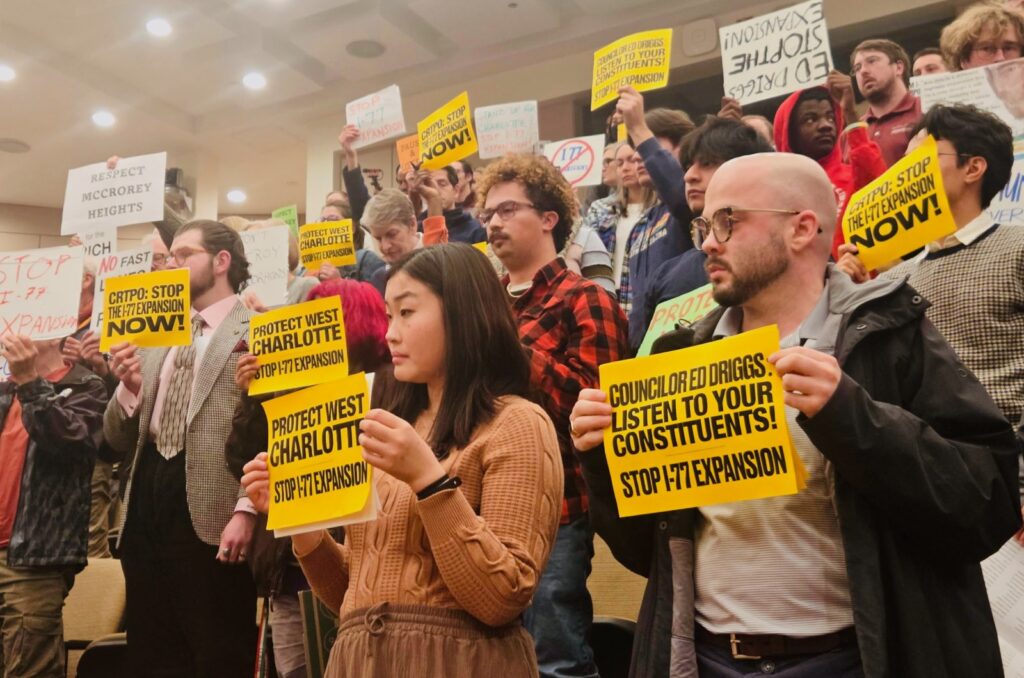
Residents organized. They attended meetings. They sent emails. They spoke with elected officials. They educated themselves on the issues. They talked to friends, neighbors, and coworkers.
They showed up.
And together they helped change the outcome of one of the largest transportation decisions our region has faced in years.
That’s an important lesson.
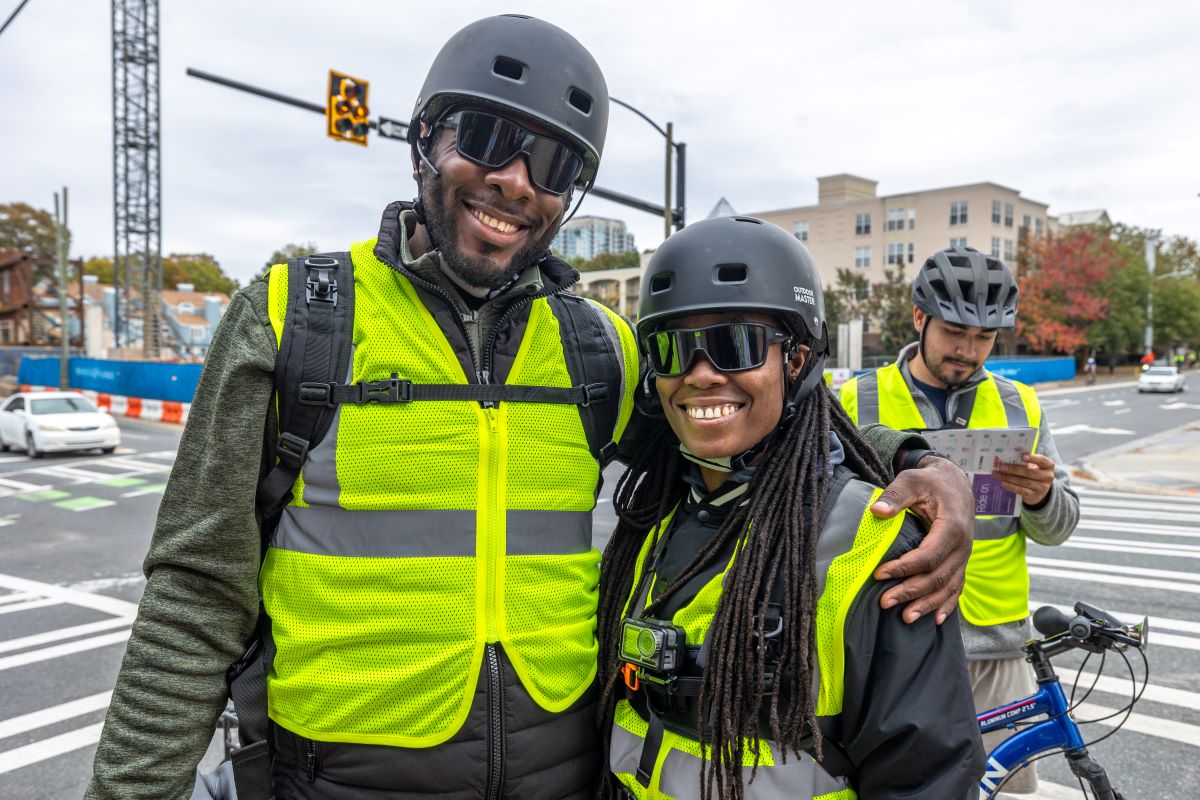
The future of Charlotte is not determined once. It is determined every day.
At City Council meetings.
At County Commission meetings.
At the state legislature.
At planning meetings most people never hear about.
The question is whether residents are paying attention when those decisions are being made.
If the recent I-77 outcome proved anything, it’s that engaged residents can make a difference. They can influence how transportation dollars are spent.
They can advocate for safer streets. They can protect neighborhoods. They can preserve natural areas. They can push for housing choices that create opportunity.
And they can help ensure that growth reflects the values of the people who actually live here.
Charlotte will continue to grow. The real question is whether we will grow intentionally.
Will we continue measuring success primarily by population growth, development activity, and corporate relocations?
Or will we also measure success by whether people can afford to live here, whether children can safely walk or bike to school, whether residents can easily access parks and nature, and whether everyone feels they have a meaningful voice in shaping their community?
Will we continue trying to solve congestion primarily by adding more highway capacity?
Or will we build a transportation system that gives people real choices about how they move around our region?
Will we make decisions based primarily on short-term gains?
Or will we think more carefully about the long-term consequences for future generations?
These are not new questions.
But they may finally be reaching a broader audience.
And that’s encouraging.
The debate over I-77 may be over, but the larger conversation is not.
Every generation leaves its mark on a city.
Ours will be measured not by how fast Charlotte grew, but by whether we had the wisdom and courage to shape that growth in ways that expanded opportunity, strengthened community, and improved quality of life for the people who call this place home.
Let’s build on this momentum and continue working toward a Charlotte where everyone feels they matter, where we care for one another regardless of the miles between us, and where opportunity abounds for everyone.
Because a city is more than its growth.
It’s how we care for one another, the opportunities we create, and the future we choose to build together.
Thanks for reading!
As a nonprofit, community support is crucial for us to continue our work — including providing free articles like this. If you found this article helpful, please consider supporting Sustain Charlotte.
Want to stay in the loop? Subscribe to our free weekly newsletter and follow us on Instagram and Facebook.