
A neighborhood’s forest destroyed for one billboard—and a fight for accountability
(Photo by Daniel Levine)
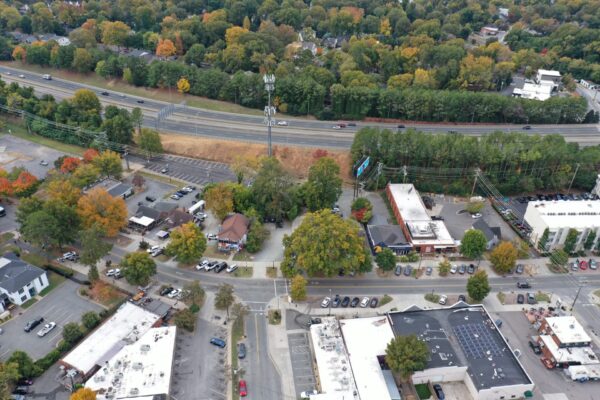
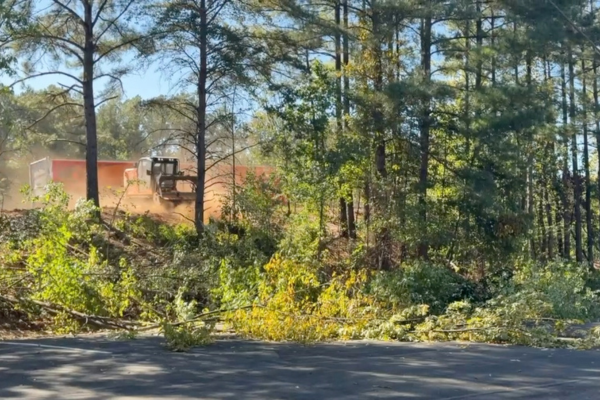
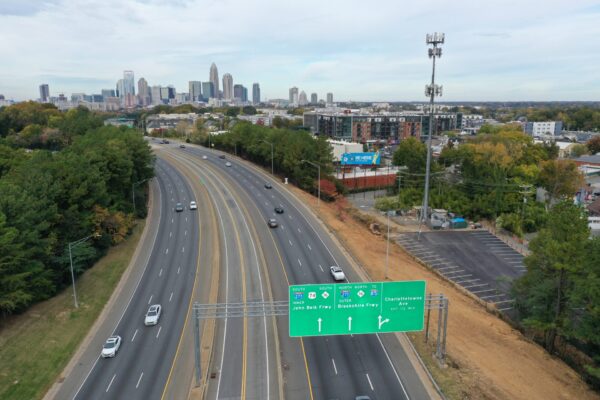
On Monday, October 26, a contractor hired by Adams Outdoor Advertising began clear-cutting a roughly 500-foot stretch of forest—tall pines and a diversity of other trees and shrubs—along Independence Boulevard in Plaza Midwood.
This forest stood on land owned by the people of North Carolina and managed by the North Carolina Department of Transportation, behind the businesses along Commonwealth Avenue between Thomas Street and The Plaza.
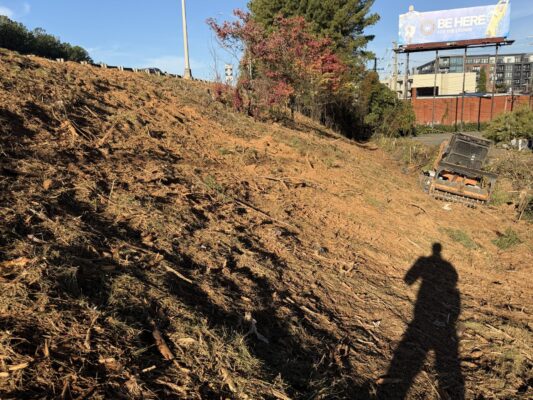
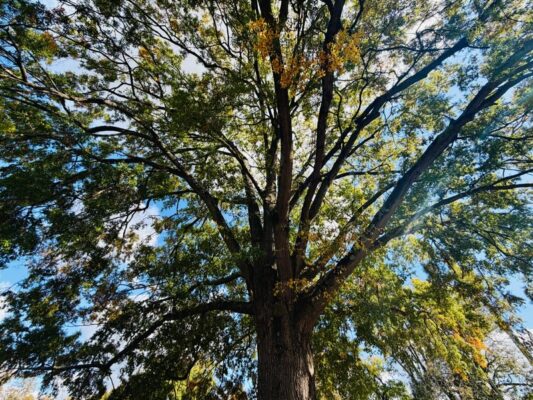
It formed a buffer between one of Charlotte’s most walkable business districts and a highway carrying thousands of vehicles, including heavy trucks, every day. It provided greenery, separation from traffic, and roots that helped hold a steep berm in place.
Adams was destroying it with industrial equipment to improve the visibility of a single, long-standing billboard.
The adjacent business and property owners I contacted had received no advance notice. They learned about the clear-cutting from Sustain Charlotte. They repeatedly told me that without our outreach, they would not have known what was happening until afterward—or who was responsible and what they could do about it.
(Photo by Daniel Levine)
A neighborhood already divided by a highway
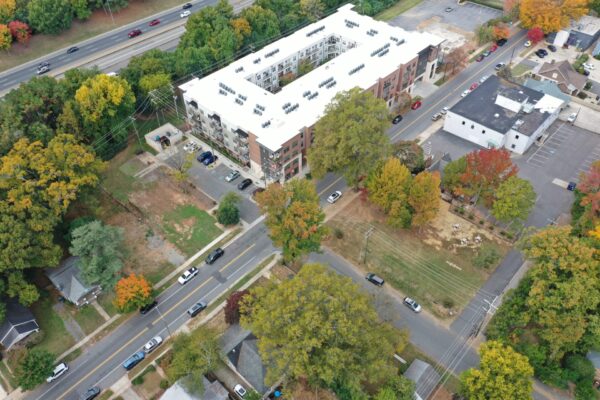
This destruction adds to a much longer history of highway impacts on these neighborhoods.
Construction of Independence Boulevard began in 1946. The road cut through established residential neighborhoods, including Elizabeth and Chantilly, destroying homes and dividing communities.
In Chantilly, it severed the northern section, between Commonwealth and Central avenues, from the larger neighborhood to the south. A portion of the northern section is now part of the area known as the Plaza Midwood business district.[1][2]
The road originally had frequent cross-street connections. Its later transformation into a limited-access freeway in the 1990s deepened the physical separation. .[1][3]
The forest on this berm provided a measure of physical separation from the highway that had divided these communities. Now that publicly-owned noise and pollution buffer was being sacrificed for private advertising.
(Photo by Shannon Binns)
Asking Adams to choose a different approach
As soon as I learned about the clear-cutting, I contacted Adams and asked the company to stop work long enough to discuss a compromise with Sustain Charlotte and the neighboring businesses and property owners.
The request was practical: preserve lower trees that did not obstruct the billboard, limit cutting to what was necessary for visibility, and work with the community on shorter replacement trees and other measures to reduce the damage.
I persuaded an Adams team, which included Vice President of Operations Joseph Romeo, to meet me at the site within a few hours.
I made those requests directly. Romeo declined.
He told me cutting everything down was in the company’s interest. When I asked about replacement plantings, he said Adams was “not in the landscaping business” and did not want to plant anything – or have the responsibility of maintaining it.
Adams had permission from NCDOT to clear-cut the site. It also had a choice about how to treat its neighbors.
(Photo by Shannon Binns)
Bringing the community’s concerns into public view
We alerted neighboring business owners and reached out to elected officials. I wrote to Mecklenburg County Commissioner Leigh Altman, who offered to share our concerns with county staff.
In my email I requested an investigation into the impacts and an NCDOT briefing on the scope of billboard-related clear-cutting across the county. I also asked who was being notified, what protections remained, and who would be responsible for erosion control, restoration, and maintenance.
On Tuesday morning, October 27, Sustain Charlotte held a press conference at the site. We invited Undercurrent Coffee owner Todd Hubber and Clifton Castelloe, co-owner of neighboring Moxie Mercantile, representing the Plaza Midwood Merchants Association, to speak to the many media outlets we had gathered: WFAE, WSOC, WBTV, WCCB, Axios Charlotte, the Charlotte Ledger, and others.
We called on Adams President and CEO Kevin Jones to immediately halt further destruction and meet with affected businesses, the merchants association, the neighborhood association, and the City.
Reporters came, documented the destruction, and helped bring wider attention to what was happening. Axios reporter Ashley Mahoney stayed at the site until 5 p.m., investigating the law and monitoring the cutting.
We also worked to understand the legal options. Neighborhood attorney and Dish owner Russell Ferguson helped examine the law. When I encountered Senator Caleb Theodros and Representative Laura Budd at Undercurrent, I asked for help securing a halt. Senator Theodros called NCDOT with me present to find out what the department could do.
City forestry staff also came by to complete an assessment in response to Clifton contacting the department with our concerns.
Despite those efforts, Adams resumed clear-cutting immediately after our press conference.
I stayed on site until 2 p.m., exploring every avenue available to stop further destruction. When I finally left, crews were taking down the tallest, most majestic pines.
It was hard to watch.
(Photo by Daniel Levine)
How state law made this possible
This happened under a legal framework that state lawmakers substantially weakened in 2026 at the behest of lobbyists for the advertising industry.
Section 43.20 of this year’s state budget law replaced the previous selective-removal process with a meager $400 annual “vegetation maintenance permit.”
Devastingly, it eliminated the existing fee required for every tree cut down and the requirement to provide the state a replanting-plan, broadly authorized cutting within the permitted zone except for native dogwoods, and sharply restricted NCDOT’s grounds for denying an application.[4]
Eliminating those costs and requirements makes clear-cutting easier and less expensive. The public loses trees and the benefits they provide, while neighboring businesses and residents are left to absorb the consequences.
NCDOT’s discretion is severely constrained. That makes legislative change essential. It does not excuse Adams’ refusal to consider a less destructive approach.
(Photo by Shannon Binns)
What we are asking for now
Adams must take responsibility for the damage and work with its neighbors. We are calling on Kevin Jones tomeet with affected businesses, property owners, the Plaza Midwood Merchants Association, the Plaza Midwood Neighborhood Association, and the City. Adams should fund an appropriate restoration and maintenance plan, including shorter native plantings that help stabilize the berm and restore some separation from the highway. We are also asking it to pause similar clear-cutting elsewhere until affected communities have been heard.
The City must explain what review occurred and help lead the response. We want the findings of its forestry assessment, a clear account of whether it received and commented on this application, and an explanation of how it will use every available review opportunity going forward. The City should help bring the parties together around restoration and advocate for stronger neighborhood protections.
Our state legislators must repair the law. We are asking for restoration of meaningful compensation for destroying public trees, enforceable restoration obligations, advance notice to affected neighbors, and a meaningful role for local communities before public forests are sacrificed for private advertising.
NCDOT must provide transparency and enforce the protections that remain. We want the permit and mapped cutting boundaries, inspection findings, and a written explanation of applicable erosion-control and stabilization obligations. We also continue to request a countywide accounting of approved and anticipated cutting, notification practices, and responsibility for maintaining these sites.
Adams continued destroying this forest despite our appeals. Accountability and restoration cannot end when the crews leave.
Sustain Charlotte advocates for growth done right—for decisions made in the open that honor the voices of the people who live with them. What happened in Plaza Midwood shows why that work matters. Public land serves a public purpose, and the people who depend on it deserve a voice in its future.
Sources and notes
[1] Charlotte-Mecklenburg Planning Commission, Plaza-Central Pedscape Plan, historical overview. Documents construction beginning in 1946 and the boulevard’s original cross-street connections.
[2] North Carolina Department of Natural and Cultural Resources, historic resources report, July 2020, Chantilly history. Describes how Independence Boulevard severed the neighborhood’s northern section, from Commonwealth to Central Avenue, from its larger southern portion.
[3] City of Charlotte, Elizabeth Local Historic District Designation Report. Documents the late-1990s conversion of Independence Boulevard between the John Belk and Brookshire freeways and Briar Creek into a limited-access freeway.
[4] North Carolina General Assembly, Session Law 2026-41, Section 43.20, particularly subsections (d) and (e), amending the vegetation-permitting process and grounds for permit denial.
The account of the advocacy, conversations, and events at the site is based on Shannon Binns’ firsthand participation and communications with affected business and property owners.