
Bring Back Red-Light Cameras To Save Lives
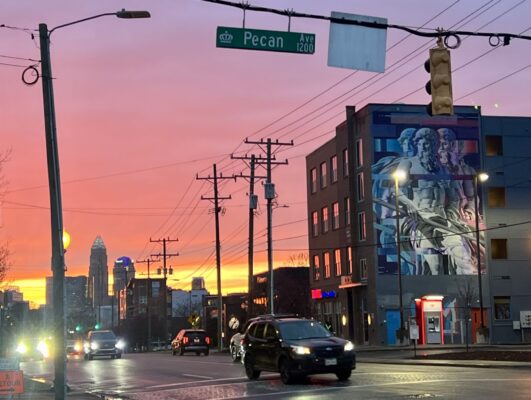
Earlier this week, our community lost Lance Sotelo, a 25-year-old whose life was cut short when a driver ran a red light on The Plaza. Lance was young, full of promise, and deeply loved — and their death is heartbreaking.
It is also tragically preventable.
Every life lost on our streets represents a person with family, friends, and a future that should not have ended this way.
Red-light running is not a rare or isolated behavior in our community, and Lance is far from the only neighbor we have lost.
According to North Carolina’s Vision Zero Safety Dashboard, between 2019 and October 2025 there were more than 3,000 intersection-related crashes in Mecklenburg County in which disregarding a traffic signal was identified as the primary contributing factor, involving nearly 9,000 people.
These crashes are among the most dangerous on our roadways, frequently resulting in severe side-impact collisions that are far more likely to cause serious injury or death than other crash types.
Together, these data tell a sobering story: too many lives in our community have been lost not by chance, but because our streets are designed in ways that allow dangerous behavior — and too often lack consistent, effective tools to prevent it.
What the Evidence Shows
Red-light running is a well-studied traffic safety problem, and the evidence is clear: Automated red-light enforcement saves lives.
Large meta-analyses and peer-reviewed studies examining red-light camera programs across multiple U.S. cities consistently find:
- Significant reductions in right-angle (side-impact) crashes, the most dangerous type of intersection collision
- Fewer injury and fatal crashes overall at signalized intersections where cameras are installed
Some studies do find a modest increase in rear-end crashes after cameras are introduced. However, this distinction matters.
Rear-end crashes are far less likely to cause serious injury or death than side-impact crashes, which are the hallmark of red-light running.
When all crash types are considered together, the net public-safety effect of red-light cameras is overwhelmingly positive.
In short: Red-light cameras reduce the crashes that are most likely to kill or severely injure people.
Charlotte Has Done This Before
Charlotte is not new to red-light cameras. The city operated a red-light camera program in the early 2000s, but ultimately discontinued it.
The reason was not a lack of safety benefit. Instead, the program became financially unsustainable under North Carolina law as it was then interpreted.
Court rulings required that 90 percent of citation revenue be directed to public schools, leaving cities unable to recover the basic costs of operating the program, including equipment, processing, and administration. As a result, Charlotte and several other North Carolina cities shut their programs down.
What Changed in 2024
In 2024, the North Carolina Supreme Court issued a landmark ruling that fundamentally changed the legal landscape for red-light cameras in the state.
The Court upheld a city’s ability to:
- Recover the reasonable costs of operating a red-light camera program, and
- Direct remaining net revenue to public schools, consistent with the state constitution and statute
This decision removed the primary barrier that led Charlotte to abandon its earlier program. Cities now have a clear legal pathway to implement red-light camera enforcement that is financially sustainable, legally sound, and aligned with public benefit.
Addressing Common Concerns
“Red-light cameras cause more crashes.”
While rear-end crashes may increase slightly, the data consistently show substantial reductions in severe and fatal side-impact crashes. Because side-impact crashes are far more likely to result in serious injury or death, the overall safety outcome is strongly positive.
“They’re just a revenue grab.”
Under North Carolina law, cities cannot profit from red-light cameras. Programs can be structured so operating costs are covered first, with remaining funds directed to public schools, not city budgets. A properly designed program is about safety and accountability — not revenue generation.
“They don’t change driver behavior.”
Multiple studies show sustained reductions in red-light violations and dangerous crashes at camera-equipped intersections. When drivers know there is consistent enforcement, behavior changes.
A Clear Path Forward for Charlotte
Charlotte has an opportunity — and a responsibility — to act.
City Council should:
- Adopt a red-light camera ordinance in compliance with state law
- Design the program to recover operating costs, as now permitted by the courts
- Ensure remaining funds are directed to Charlotte-Mecklenburg Schools, as required
- Deploy cameras strategically at high-injury intersections and pair them with proven safety improvements
Lance Sotelo’s death should not fade into another statistic. We know red-light running is a widespread problem. We know it leads to the most dangerous types of crashes. And we now have a clear, lawful, evidence-based tool to address it.
Charlotte should use it — and save lives.
This post is dedicated to the memory of Lance Sotelo and to all the neighbors we have lost on Charlotte’s streets whose lives should not have ended this way.