
How CATS will improve transit in the next year
Charlotte took an important step forward this week as the Charlotte Area Transit System (CATS) presented its budget at last night’s City Council meeting. The investments included in that budget will be possible because Mecklenburg County voters approved a one-cent sales tax last November.
View the presentation and discussion here (timestamp 19:27 – 1:54:00).
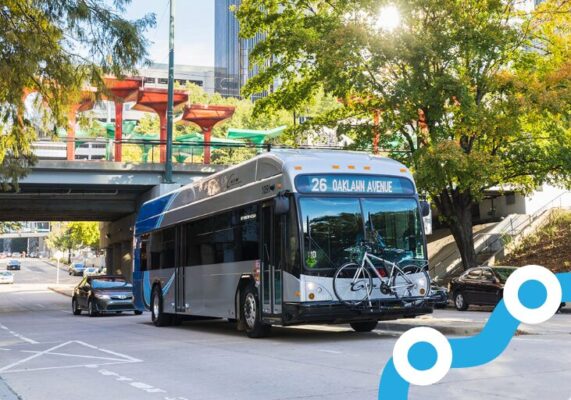
CATS’ budget proposes to improve 100 bus stops in the first year, among other investments. (image: MeckConnect.com)
A New Level of Investment in Transit
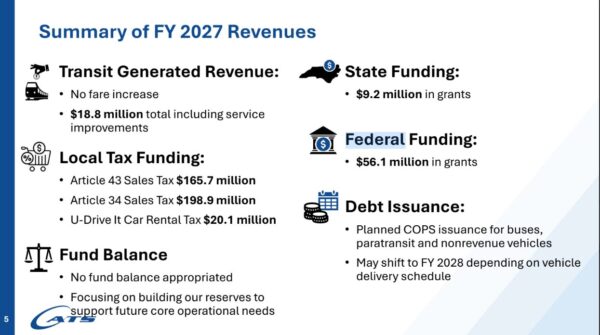
The proposed FY2027 CATS budget totals about $571.7 million, with roughly $314 million for operations and $225 million for capital investments. It reflects a system preparing to grow in a meaningful way.
A large share of that funding comes directly from sales tax that Mecklenburg voters have approved. The existing half-cent sales tax is expected to generate about $165.7 million, while the new one-cent tax will bring in approximately $198.9 million in its first year. Together, those local revenues add up to about $365 million annually, providing a stable foundation for long-term investment.
This kind of dedicated funding is essential because it allows Mecklenburg County to plan for the future, leverage federal dollars, and build a transit system that supports sustainable growth. Without it, the region would continue to fall behind as population and traffic increase.
A Transition to Regional Leadership
This year also marks a transition in how transit will be governed.
For the first half of the fiscal year, CATS will operate under the City of Charlotte. Midyear, operations will shift to the new Metropolitan Public Transit Authority (MPTA).
Transportation challenges do not stop at city limits, and neither should solutions. A regional authority creates the opportunity to better align transit with land use, housing, and economic development across Mecklenburg County.
Buses First, Because Riders Need Results Now
One of the most encouraging aspects of this budget is its focus on improving bus service in the near term.
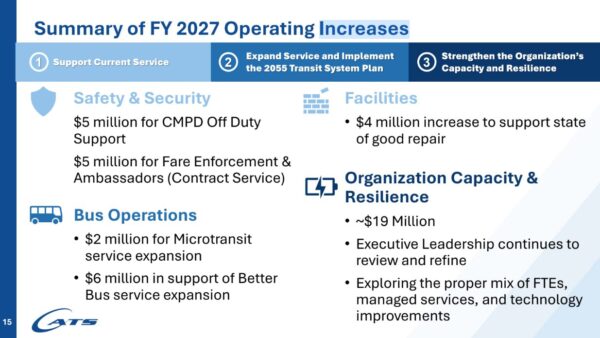
The budget includes about $6 million for the Better Bus program and $2 million for microtransit expansion, along with investments in staffing and future vehicle purchases. These improvements aim to increase frequency, reliability, and access.
From a sustainability perspective, this is critical. A strong bus network is the fastest way to reduce car dependence, lower household transportation costs, and expand access to jobs and services. It also lays the groundwork for future transit-oriented development by making more places viable for car-light living. Providing high-quality transit creates a meaningful path for our region to reduce air pollution and support a healthy climate by limiting tailpipe emissions from vehicles.
There are still constraints, especially around how quickly new buses can be delivered. CATS is prioritizing improvements that riders can feel soon, not decades from now.
Investing in the Places Where Transit Happens
This budget makes important investments in bus shelters, facilities, and rider amenities. Facility spending is increasing by more than 50 percent, and there is a strong emphasis on bringing the system into a state of good repair.
There is also momentum behind expanding shelters with lighting, seating, and in some cases solar power and Wi-Fi. These are essential improvements that make transit more accessible, especially for people who rely on it every day.
Councilmembers raised an important point that aligns with Sustain Charlotte’s priorities. These investments must be equitable and consistent across the city. Riders in every neighborhood deserve safe and comfortable infrastructure, not just those in the highest ridership corridors.
Safety investments are also growing significantly, with total spending nearing $30 million. While safety is important, investments in comfort, reliability, and access also deserve strong attention.
Rail Projects and the Future of Growth
The long-term vision for Mecklenburg’s transit system includes rail, and that work is moving forward.
The Red Line commuter rail is the most advanced project and will continue through design and environmental review. The Silver Line, which will connect east and west Charlotte including the airport, is also progressing.
Transit corridors create opportunities for transit-oriented development, where housing, jobs, and services are located near high-quality transit. This is one of the most effective ways to reduce sprawl, cut greenhouse gas emissions, and make neighborhoods more walkable and connected.
As these projects move forward, it will be critical to align them with land use policies that support compact, mixed-use development and protect existing communities from displacement.
A Plan That Connects Transportation, Climate, and Opportunity
This budget represents the first step in implementing a 30-year transit plan. It’s also an opportunity to align transportation with broader community goals.
A well-designed transit system can:
- Reduce greenhouse gas emissions by shifting trips away from cars
- Lower household transportation costs, which are often the second-largest expense after housing
- Expand access to jobs, education, and healthcare
- Support more compact, walkable development patterns
The success of these outcomes depends on how investments are made and how transit is integrated with land use and housing decisions.
The Bottom Line
Charlotte is entering a new chapter for transportation and growth.
With voter-approved funding in place, a regional transit authority on the horizon, and a clear investment plan, the region has a real opportunity to build a system that is more sustainable, equitable, and connected.
The challenge now is to follow through and deliver better service quickly, invest equitably across communities, and align transit with smart land-use policies.
Stay engaged as the Metropolitan Public Transit Authority (MPTA) takes shape. Decisions made in the coming months will shape how transit serves our communities for decades. Follow updates, attend public meetings, and make your voice heard to help ensure the system is equitable, sustainable, and responsive to the needs of all Mecklenburg County residents.