
Mecklenburg County Has Built Many Greenways. Now We Need a Connected Network for Everyone.
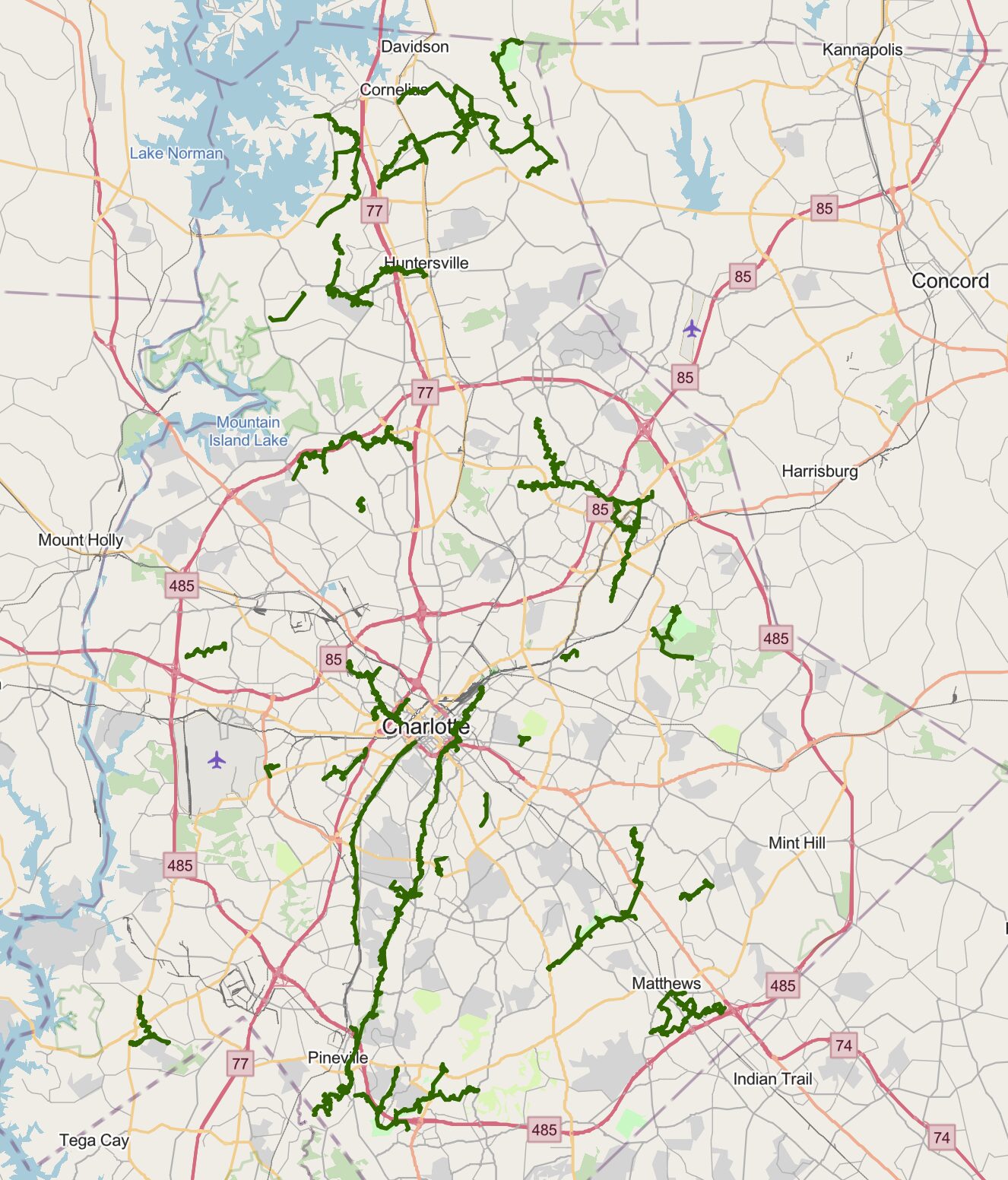
(Mecklenburg County greenway map)
The next era of greenway investment should focus on closing gaps, especially in Charlotte’s crescent.
Mecklenburg County has made meaningful progress building greenways across our community. These corridors are among our region’s most beloved public investments — places where people walk, bike, run, push strollers, connect with nature, and enjoy a quieter, healthier way to move through the city.
But when we look at a countywide map of existing greenways, an important pattern becomes clear:
Mecklenburg County has many greenway segments, but not yet a fully connected greenway network.
And from an equity perspective, that matters.
The map tells a clear story
Across Mecklenburg County, greenways generally follow creek and stream corridors. That makes sense. These corridors often provide natural opportunities for trails because they follow floodplains and open spaces.
But the result is a system shaped largely by where land was available — not always by where residents most need safe, comfortable transportation options.
Some parts of the county have long, continuous greenway corridors that allow residents to travel meaningful distances. The most visible example is the north-south spine running from Uptown toward south Charlotte, Pineville, and Ballantyne. That corridor is a major asset and shows what is possible when greenway segments are connected into something larger.
In other areas, especially across much of Charlotte’s crescent, the pattern looks different. There are greenway segments, but many appear shorter, disconnected, or isolated from one another.
That difference is important.
A short greenway segment can be beautiful and valuable. But a continuous greenway corridor can become something more: a safe transportation option, a connection to parks and schools, a route to transit, a way to reach jobs and daily needs, and a public health resource for entire neighborhoods.
Check out Sustain Charlotte’s greenway map here.
The equity gap is about more than mileage
When we talk about equitable greenway investment, the question is not simply whether a neighborhood has a greenway nearby.
The better questions are:
- Can residents safely reach it without driving?
- Does it connect to other greenways, sidewalks, bike lanes, parks, schools, transit stops, libraries, jobs, and grocery stores?
- Is it useful for everyday trips, or only for recreation?
- Does it help repair historic infrastructure gaps — or does it reinforce them?
From the map, greenway investment appears more continuous and connected in Charlotte’s higher-income wedge than in many crescent communities. South Charlotte, in particular, benefits from a strong greenway spine that links multiple neighborhoods and destinations.
Meanwhile, many communities in west, north, northeast, and east Charlotte have fewer continuous connections. In some places, greenways exist as fragments rather than as part of a seamless network.
That means residents in the crescent may be less likely to experience the full benefits greenways can provide.
And that should guide future investment.
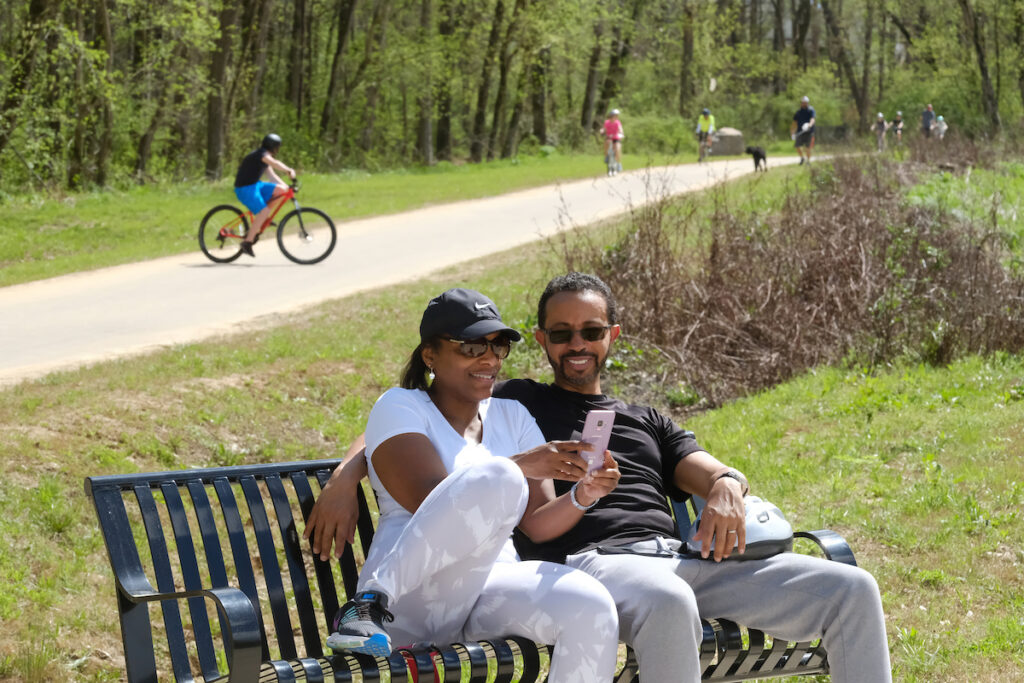
(Little Sugar Creek Greenway from Sharon Road West south to I-458.)
Greenways should be transportation infrastructure, not just recreation amenities
Greenways are often described as parks or recreation facilities. They are those things, and they should be celebrated for the joy, beauty, and health benefits they provide.
But they are also transportation infrastructure.
For many residents, especially those who do not own a car or who are trying to reduce driving, a well-connected greenway can provide a safe, low-stress route for everyday travel. It can help people reach a bus stop, a school, a job, a grocery store, a park, or a nearby neighborhood without having to walk or bike along dangerous high-speed roads.
That is why connectivity matters so much.
A greenway that ends abruptly before reaching a major road, transit stop, school, or commercial center is less useful than one that connects people directly to where they need to go.
The next phase of Mecklenburg County’s greenway investment should focus not only on building more miles, but on building the right miles — the missing links that turn isolated segments into a true network.
What Mecklenburg County should prioritize next
To make greenways more accessible and useful for more residents, especially in Charlotte’s crescent, Mecklenburg County should prioritize the following investments:
1. Close gaps in the crescent first
Future greenway funding should prioritize communities that have historically received less infrastructure investment and currently lack continuous greenway access.
That includes many neighborhoods in west, north, northeast, and east Charlotte as well as other parts of Mecklenburg County — areas where residents would benefit greatly from safe, shaded, low-stress walking and biking connections.
The goal should be simple: make sure crescent communities receive the same quality of connected greenway access that parts of the wedge already enjoy.
2. Connect greenways to transit
Greenways become far more useful when they connect directly to bus stops, transit centers, and future rapid transit corridors.
A resident should be able to safely walk or bike from their neighborhood to transit without having to navigate dangerous roads or missing sidewalks. Greenways can play a major role in making transit more accessible, especially for first-mile and last-mile trips.
This is especially important in neighborhoods where more residents rely on transit or would use transit more often if they could safely reach it.
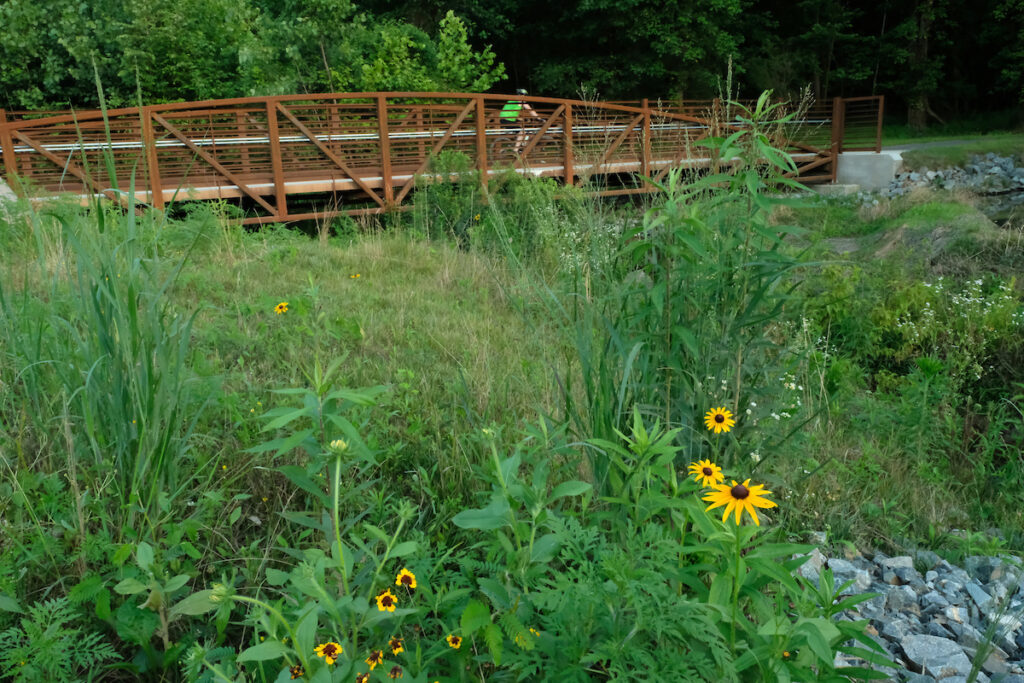
(McAlpine Creek Greenway)
3. Build safe connections across major barriers
Highways, rail lines, creeks, and major arterial roads divide many Charlotte neighborhoods. In the crescent, these barriers often make walking and biking especially difficult.
Greenway investments should include the bridges, crossings, underpasses, protected intersections, and street-level connections needed to make the network truly usable.
A greenway that stops at a dangerous road is not a complete connection.
4. Link greenways to schools, parks, libraries, and daily destinations
Greenways should be planned around the places people need and want to go.
That means prioritizing connections to public schools, community colleges, parks, recreation centers, libraries, grocery stores, medical facilities, job centers, and affordable housing.
The more greenways connect to daily destinations, the more they become part of everyday life — not just weekend recreation.
5. Improve access points and neighborhood connections
Even when a greenway exists nearby, residents may not be able to reach it easily or safely.
The County and City should invest in more visible, welcoming, ADA-accessible entrances, better signage, safer street crossings, sidewalks leading to trailheads, lighting where appropriate, and connections from surrounding neighborhoods.
A greenway should not feel hidden, hard to find, or disconnected from the people it is meant to serve.
6. Coordinate County, City, and town investments
Greenways cross jurisdictional boundaries. Residents do not experience them as “County,” “City,” or “town” infrastructure — they experience them as a system that either works or does not.
Mecklenburg County, the City of Charlotte, and the six towns should coordinate more closely to close gaps, align greenway planning with transportation planning, and ensure the network serves people across the entire county.
7. Measure equity and connectivity, not just total mileage
Total greenway mileage is an important metric, but it is not enough.
Mecklenburg County should also track:
- Greenway access by neighborhood and income level
- Distance to the nearest greenway entrance
- Continuous miles accessible from each neighborhood
- Connections to transit, schools, parks, and job centers
- Gaps in historically underserved communities
- Safety of routes leading to greenways
- ADA accessibility and quality of access points
A countywide greenway system should be judged not only by how many miles exist, but by how well those miles serve the people who need them most.
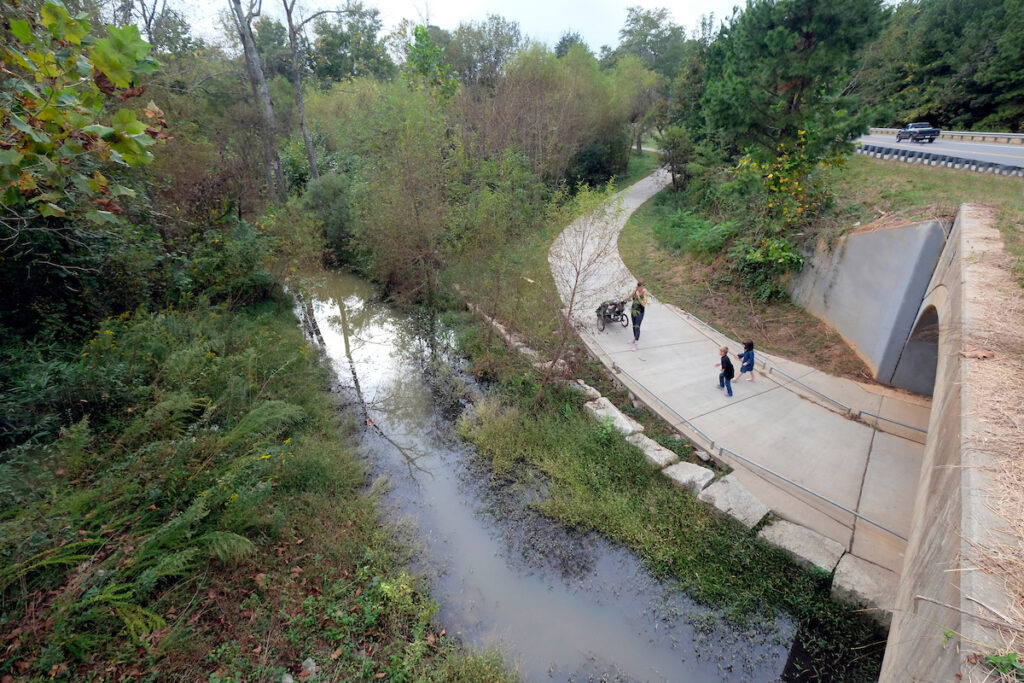
(Torrence Creek Greenway and creek as seen from Gilead Road.)
The opportunity ahead
Mecklenburg County has already built many beautiful greenway segments. That is worth celebrating. County leaders — both staff and elected officials — have worked incredibly hard with limited resources to expand the greenway system.
But the next challenge is bigger and more important: connecting those segments into a true countywide network that serves everyone.
The challenges are real. Every creek crossing of a greenway requires a bridge, which is expensive. It can be logistically very challenging to coordinate crossings of highways and railroads.
For residents in the wedge, greenways increasingly function as long, connected corridors. For many residents in the crescent and other parts of Mecklenburg County, this is not the case.
That is not just a planning issue. It is an equity issue.
Greenways can help improve public health, expand transportation choices, reduce household transportation costs, connect people to opportunity, and make our neighborhoods more livable. But only if they are planned and funded in a way that reaches all communities — especially those that have historically been left with fewer safe and comfortable options.
The question is not just whether a neighborhood has a greenway.
The question is whether that greenway connects people to opportunity.
Mecklenburg County has the chance to build on decades of progress and create one of the most useful, accessible, and equitable greenway networks in the country.
To do that, future investment should focus where the gaps are greatest — and where the benefits can be life-changing.
We have built many greenway pieces. Now we need to connect them into a system that works for everyone.
Thanks for reading!
As a nonprofit, community support is crucial for us to continue our work — including providing free articles like this. If you found this article helpful, please consider supporting Sustain Charlotte.
Want to stay in the loop? Subscribe to our free weekly newsletter and follow us on Instagram and Facebook.