
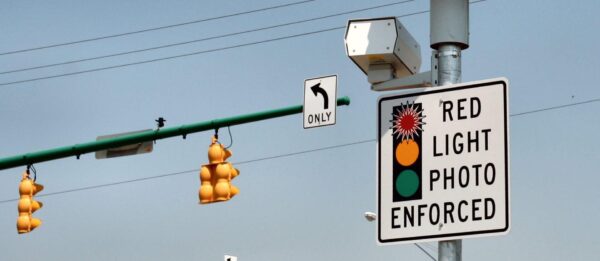
Let’s save lives by bringing red light cameras back to Charlotte
On April 6th, the City Council’s Safety Committee restarted the conversation about introducing red light cameras to save lives on Charlotte’s streets. You can watch the conversation here.
The Goal: Vision Zero
Following the traffic death of 25-year-old Lance Sotelo at the hands of a driver who ran a red light, more than 100 of you contacted City Council in January in response to our action alert calling for the return of red light cameras to reduce dangerous driver behaviors that are killing and seriously injuring far too many people.
The initiative supports Charlotte’s Vision Zero commitment to eliminate all traffic-related fatalities and serious injuries.
Data shows that “T-bone” angle collisions (which are often very severe, resulting in deaths and serious injuries) can be reduced by up to 37% with camera enforcement. The most dangerous crashes can be decreased by 60%. This data comes from the previous red light camera program here in Charlotte.
In 2025 alone, 12 fatal or serious injury collisions occurred in the city involving drivers who ignored traffic signals.
Lessons from the Past
Charlotte ran the Safe Light red light camera program from 1998 to 2006.
It worked! Here’s what happened:
- Angle crashes decreased by 37% across all SafeLight intersections
- Angle crashes decreased by 60% on camera approaches
- All crashes decreased by 19% on camera approaches
- Rear-end crashes increased by 4% on camera approaches
The program was discontinued in 2006 following legal rulings on state law that required disbursing 90% of citation revenue to local schools.
Greenville implemented its red light camera program by securing a special local law from the NC General Assembly and partnering with the local school system through an interlocal agreement. Under this model, all citation revenue is first directed to the school board to comply with the state constitution, and then the school board reimburses the city for the actual costs of operating the program. This structure allowed Greenville to fully fund and manage the program while remaining legally compliant. This funding model was ultimately upheld by the North Carolina Supreme Court in 2024, creating a precedent for other NC municipalities.
The Path Forward
The committee is considering two options to operate and fund the red-light cameras:
Option 1. City-funded program only: This would be the quickest option, but limited by cost recovery. It wouldn’t need any extra state legislative approval. The city would keep 10% of revenue for administration and direct 90% to schools. However, this likely wouldn’t cover the city’s full cost of administering the program, raising concerns about long-term viability.
Option 2. Interlocal agreement: The city would partner with the Charlotte-Mecklenburg School Board and invoice CMS to fully reimburse operational costs from the camera citation revenues. This option would require action from the General Assembly, which would take more time, but would provide more revenue recovery to allow the program to expand to additional locations.
Councilperson Dimple Ajmera suggested that the city combine both approaches, using Vision Zero funds to install cameras at 10 sites for a pilot project while working on the interlocal agreement and discussions with the state.
Next Steps and our take: The city aims to collect more cost data, examine Greensboro’s efforts to restart its program, and analyze potential locations within the High Injury Network.
While council members support the idea of saving lives, they have asked for a more detailed analysis of the program’s cost-effectiveness and its effects on different types of accidents, such as rear-end collisions.
We believe that achieving Vision Zero requires not just one simple approach but a serious, multifaceted effort to bring about real change and make our streets safer.
Red light cameras are an essential part of that enforcement effort.
We agree that hesitation will cost more lives, so starting small at the most dangerous locations is justified. However, the interlocal agreement and collaboration with the general assembly must also be prioritized to expand the program to more areas in Charlotte.
We strongly urge Council to prioritize launching the 10-location pilot project immediately to save lives and lay the groundwork for expanding the program in the near future.