
Climate Change Is Bringing More Floods and Droughts. We Must Prepare for Both.
At first glance, floods and droughts may seem like opposite problems. But as Mecklenburg County’s Environmental Stewardship Committee discussed at its June 1 meeting (video here), both are becoming more common and more severe as our climate changes. And both pose growing challenges for the Charlotte region.
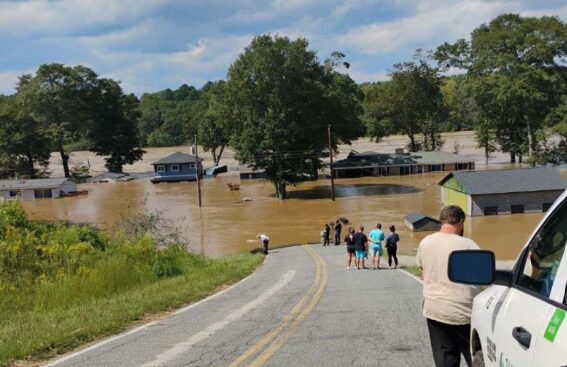
For many residents, the memory of Hurricane Helene and other recent flooding events is still fresh. Yet at the same time, our region is now experiencing one of the driest starts to a year on record. According to Charlotte Water, Mecklenburg County has received significantly less rainfall than normal in 2026, contributing to severe drought conditions across much of North Carolina.
This whiplash between too much water and too little is exactly what climate scientists have warned about for years. A warming atmosphere holds more moisture, leading to heavier downpours and increased flood risk. At the same time, hotter temperatures increase evaporation and dry out soils, intensifying drought conditions. Communities like Mecklenburg County are increasingly being forced to manage both extremes.
The committee meeting highlighted how local governments are adapting to these challenges. Mecklenburg County Storm Water Services presented updates to its flood mitigation retrofit program, which helps homeowners reduce flood risk by elevating homes, relocating structures, and making other resilience improvements. County staff noted that changing rainfall patterns are already being incorporated into future floodplain mapping and risk assessments.
Mecklenburg County government is also working to make these programs more accessible to lower-income residents, who are often disproportionately impacted by flooding and have fewer resources to recover after disasters. Proposed changes would increase financial assistance and reduce barriers that have prevented many residents from participating.
Charlotte Water provided an update on the region’s drought response. The utility entered Stage 2 drought restrictions in May, triggering mandatory conservation measures across the Catawba River Basin. Officials emphasized that every drop counts as the region works to preserve water supplies and avoid more severe restrictions.
Climate resilience must be part of how we plan and grow.
Land use decisions, transportation investments, housing policy, and environmental stewardship are all connected. Development patterns influence stormwater runoff and flood risk. Tree canopy helps reduce urban heat and improve water absorption. Compact, walkable communities can reduce greenhouse gas emissions that contribute to climate change while also lowering infrastructure costs and increasing resilience.
The good news is that Mecklenburg County has opportunities to act now. Investments in green infrastructure, flood mitigation, water conservation, and sustainable growth can help protect residents from future climate impacts. But those investments must prioritize equity so that all communities—not just those with the most resources—can withstand increasingly frequent extreme weather.
Our Take
Floods and droughts are no longer rare events. They are becoming part of our new climate reality, and we must proactively prepare for them.
At Sustain Charlotte, we remain committed to advancing policies and investments that create a more resilient, sustainable, and equitable region for everyone who calls Mecklenburg County home.
This is why we advocate for sustainable growth that optimizes land use while preserving healthy tree canopy and the green spaces that reduce both the risk and impacts of floods and droughts. We have joined the conversation about the appropriate role of data centers in our area, as they consume vast amounts of water, competing directly with the needs of humans and wildlife.
Your Turn
Learn more about Mecklenburg County’s drought restrictions and resources here.